
Introduction
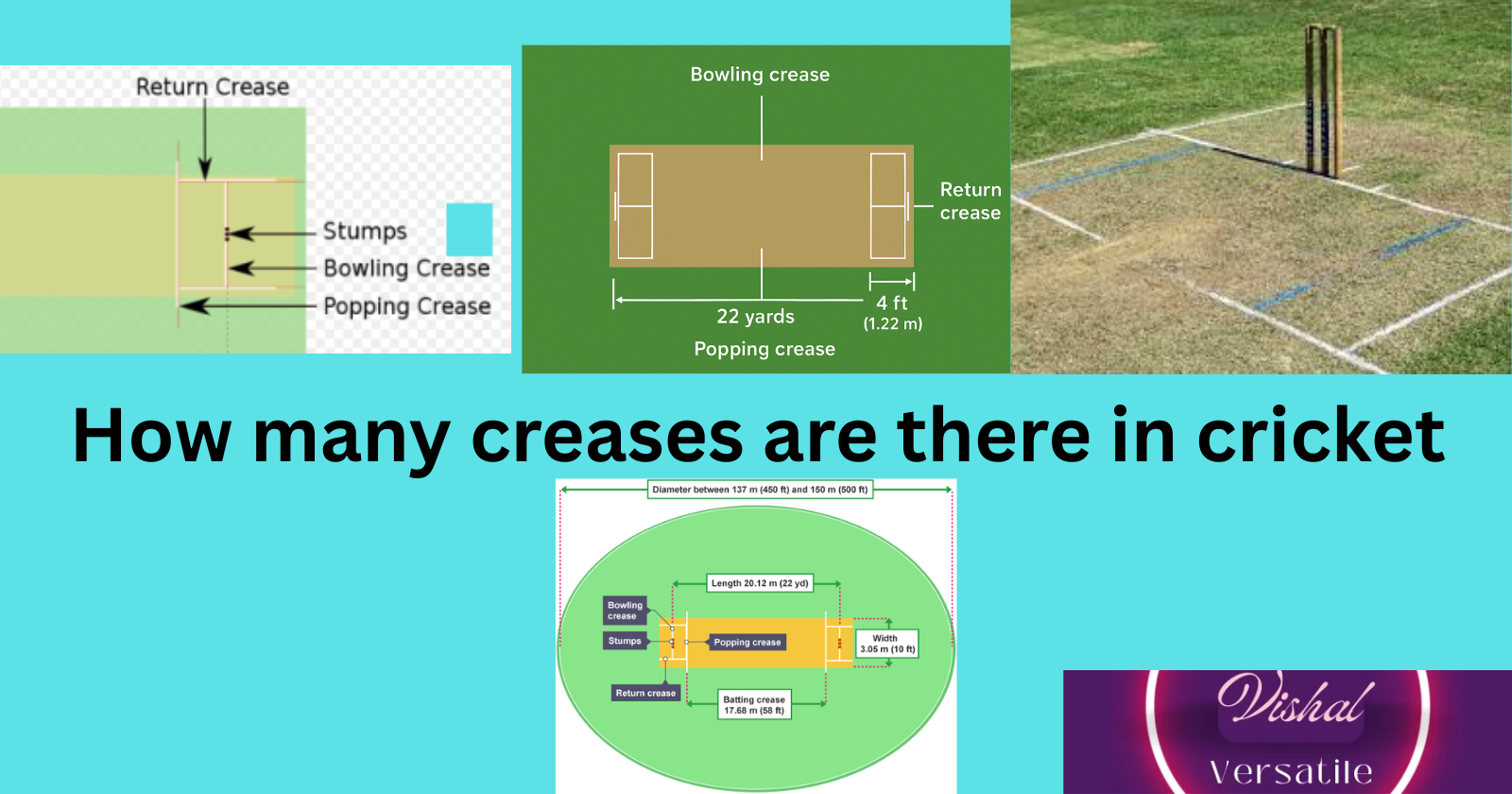
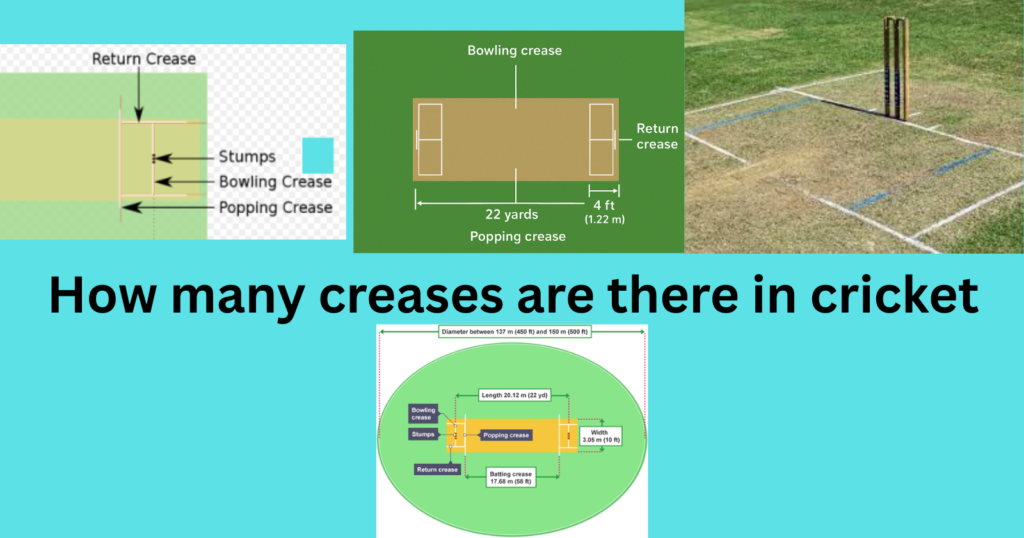
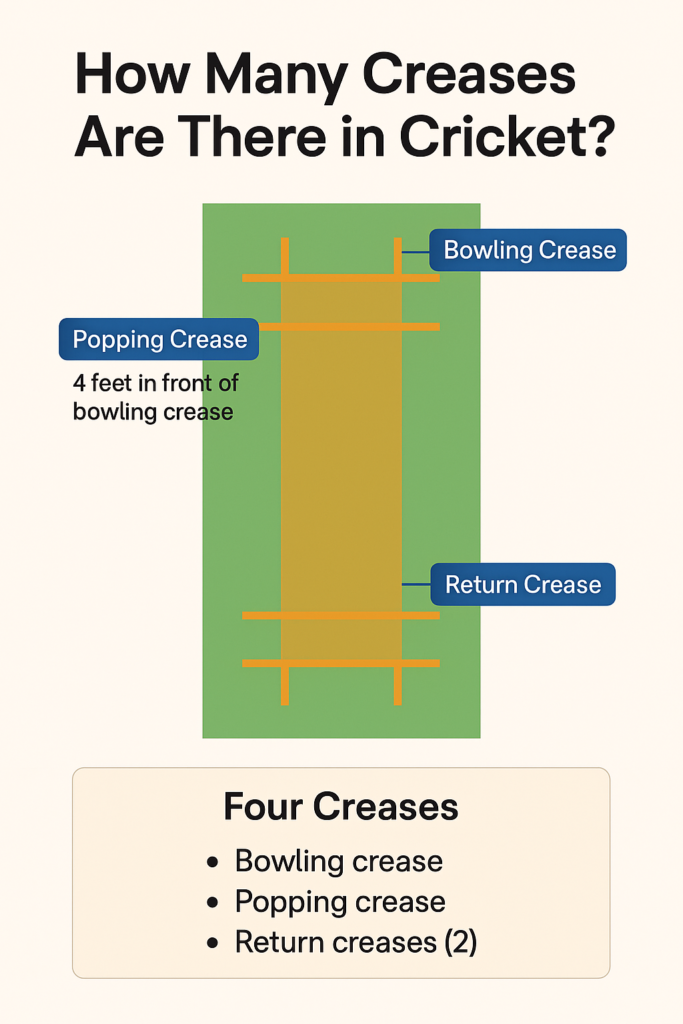
- In cricket, there are a total of four creases at each end of the pitch: one bowling crease, one popping crease, and two return creases. Together, they define the playing area for batters and bowlers, making them essential markings in the game.
- Cricket is a sport rich in tradition and technical details, and one of the most important aspects of the game is the set of creases marked on the pitch. These white lines may look simple, but they play a crucial role in determining whether a batter is safe, a bowler has delivered legally, or a wicketkeeper has overstepped.
- The Four Types of Creases in Cricket:
- At each end of the pitch, four creases are drawn around the stumps:
| Crease Name | Position | Purpose |
| Bowling Crease | Directly behind the stumps | Marks where the bowler must deliver the ball; stumps are placed here. |
| Popping Crease | 4 feet in front of the bowling crease | Defines the safe zone for batters; crossing it can mean being run out or stumped. |
| Return Creases (2) | Perpendicular to the bowling crease, extending behind | Restrict the bowler’s movement; stepping outside can result in a no-ball. |
- Dimensions and Layout—>
- Bowling creases are 22 yards apart, marking the length of the pitch.
- The popping crease is drawn 4 feet in front of the bowling crease.
- Return creases extend at least 8 feet behind the bowling crease, ensuring bowlers stay within limits.
These measurements are governed by Law 7 of the Laws of Cricket, making them standardized across all formats.
- Why Creases Matter—>
- Batting Safety: A batter must ground their bat or foot behind the popping crease to avoid being run out.
- Bowling Legality: Bowlers must deliver the ball with some part of their front foot behind the popping crease and within the return creases.
- Wicketkeeping Rules: The wicketkeeper cannot move in front of the stumps until the ball passes the popping crease.
- A crease can be called as a restriction for both batter, bowler or fielder.
- The umpire takes the view of the crease for taking decisions.
- The bowler after his run up, when he bowls, his front foot should not cross the popping crease. Otherwise the ball is called as a ‘No Ball’.
- There is a bowling crease in line with the stumps. The return creases on both sides of the creases also is a kind of a restriction for the bowler.
- The bowler has to ensure that he doesn’t cross these return creases. His foot while bowling should not cross these return creases.
- Every ball bowled is eyed by the umpire. Even Now-a-days there is a television replay on bowler’s front foot. The third umpire adjudges a no ball if the bowler’s front foot has crossed has the popping creases.
- As a batter you should be inside the crease.
- If the batter is outside the popping crease and the wicketkeeper dislodges the stumps, after the ball is bowled, it is a stumpout.
The Line belongs to the Umpire
- Always remember the popping crease line belongs to the umpire.
- As a bowler some part of the foot should be behind the line. On the line is a No Ball. Many a times this is always reviewed by the third umpire.
- If while taking a run, the batter’ bat is on the line, the umpire adjudges it as runout. Some part of the bat of the batter should be inside the crease to complete the run. The same rule goes for the stumpings or stumpouts.
- Many a times it happens that when a batter faces the swing bowler, the batter stands outside the crease to negate the swing.
- A batter is allowed to stand outside the crease while facing a swing bowler and when the wicketkeeper is standing away from the stumps.
- As the delivery ends, the batter should be in the crease or, the wicketkeeper or any fielder can get him out by hitting the stumps.
- The famous Aussie batter, Matthew Hayden used to stand out of his popping crease, while batting, against medium pacers to show aggression with the bat.
- Technology in umpiring: Crease lines are now often enhanced with paint or chalk mixed with durable compounds to withstand wear during matches.
Official page of ICC on Instagram
Timeline based on the creases of cricket
Frequently Asked Questions(FAQs)
What is the difference between a crease and a pitch in cricket?
While the pitch refers to the 22-yard strip between the wickets, creases are specific lines marked on the pitch that define legal zones for bowlers and batters. Creases are part of the pitch but serve distinct regulatory purposes.
Can crease markings vary in different formats of cricket (Test, ODI, T20)?
No, the dimensions and placement of creases remain consistent across all formats. However, their strategic importance may vary—for example, in T20s, batters often use the popping crease more aggressively to gain ground.
How do umpires use creases to make decisions during a match?
Umpires rely on crease lines to judge no-balls, run-outs, stumpings, and LBW decisions. Technologies like Hawk-Eye and UltraEdge are calibrated using crease positions to ensure accurate calls.
Are crease lines ever repainted during a match?
Yes. In longer formats like Test cricket, crease lines may fade due to wear and tear. Ground staff often repaint or refresh them during breaks (e.g., lunch or tea) to maintain visibility for players and officials.
Who first introduced crease markings in cricket history?
Crease markings date back to the 18th century, evolving from scratch marks to painted lines. The Marylebone Cricket Club (MCC) formalized their dimensions in the Laws of Cricket, which continue to govern the game globally.